Article
Crown Lengthening: Fundamental Concepts and Clinical Indications
Modern crown lengthening isn’t just about exposing tooth structure—it’s about knowing the exact indications and avoiding contraindications to ensure lasting, predictable results.
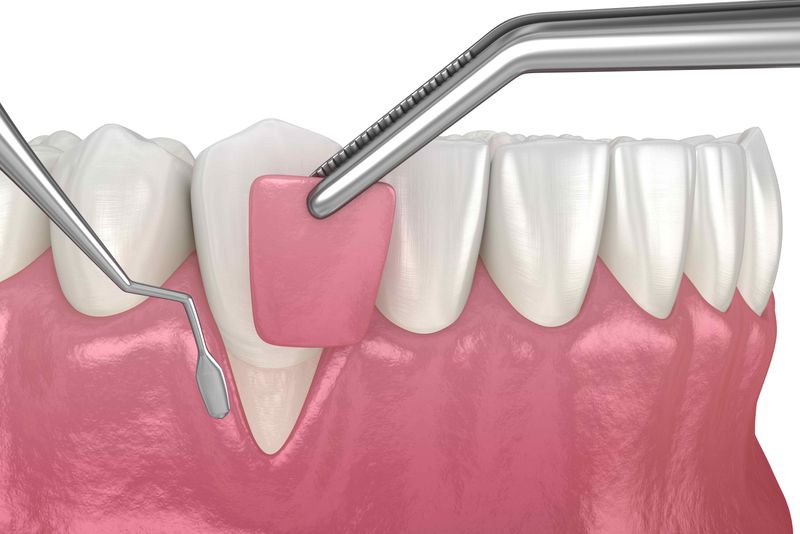
Crown lengthening is more than a surgical trick to “make teeth longer.” In modern dentistry, it is a carefully planned procedure that blends biology, function, and esthetics. Exposing adequate clinical crown height while maintaining the biologic width preserves natural teeth. It also improves restorative outcomes and meets patient expectations1.
- Short clinical crowns often lead to poor retention, weak ferrule, and challenging margin placement.
- The biologic width (now called supracrestal tissue attachment) averages 2.04 mm, composed of:
- Junctional epithelium: ~0.97 mm
- Connective tissue attachment: ~1.07 mm
- To avoid inflammation, bone loss and compromised esthetics maintain at least 3 mm between the restoration margin and the alveolar bone1.
- Crown lengthening re-establishes this biologic harmony, creating a predictable foundation for restorations.
Indications You’ll See in Daily Practice
- Subgingival caries or fractures – for complete removal and restorative access1,2.
- Inadequate crown height – to achieve ferrule and prevent fracture1,2.
- Excessive gingival display / altered passive eruption – for esthetic correction4.
- Margin relocation – moving restorative margins into biologically safe zones3.
- Special cases – root surface perforations, cervical root resorption1,4.
Contraindications to Keep in Mind1,5
- Unfavorable crown-to-root ratio (<1:2).
- High furcation involvement – may expose furcations after surgery.
- Thin gingival biotype – risk of post-op recession.
- Non-restorable teeth – extraction is a better option.
- Inadequate tooth-to-arch alignment – may compromise occlusion or restorative outcomes.
- Risk to adjacent periodontium or aesthetics – Potential adverse effects on adjacent tissues or esthetic outcome.
- Inadequate attached gingiva – complicates flap design, stabilization, and suturing.
- Significant vertical maxillary excess – may require orthodontic treatment or orthognathic surgery.
Beyond the Surgery
- Oral hygiene is the real key: Without plaque control, even the most technically perfect crown lengthening will fail.
- Respect esthetics: Especially in the anterior zone, crown lengthening must balance biologic gain with patient appearance.
- Patient-centered decisions: While implants are common, many patients want to retain their natural dentition. Crown lengthening often makes this possible.
Bottom line
Crown lengthening is not just a mechanical procedure. It’s a biologically respectful, evidence- based approach that enables restorations to last longer, look better, and function predictably.
References
- Qali M, Alsaegh H, Alsaraf S. Clinical considerations for crown lengthening: a comprehensive review. Cureus. 2024 Nov 3;16(11).
- Hutomo DI, Sunarto H, Fitria AR. Crown Lengthening for Obtaining Biological Width in Dental Restoration: A Case Report. KnE Medicine. 2022 Apr 25:160-8.
- Geo TD, Gupta S, Gupta SG, singh Rana K. Is Deep margin elevation a reliable tool for cervical margin relocation?–A comparative review. Journal of Oral Biology and Craniofacial Research. 2024 Jan 1;14(1):33-8.
- Marzadori M, Stefanini M, Sangiorgi M, Mounssif I, Monaco C, Zucchelli G. Crown lengthening and restorative procedures in the esthetic zone. Periodontology 2000. 2018 Jun;77(1):84-92.
- Anggraini D, Silaban K, Nasution RO, Amalia M. Aesthetic Crown Lengthening for Gummy Smile Treatment: A Case Report. InTalenta Conference Series: Tropical Medicine (TM) 2025 Jul 31 (Vol. 2, No. 1, pp. 164-170).
Related Contents
Video
Management of Traumatic Tooth Avulsion: When & How?
Traumatic tooth avulsion is a true dental emergency requiring immediate and structured management to...
Article
Prosthetic Design Factors That Prevent Peri-Implant Bone Loss
You placed the implant perfectly. Osseointegration was flawless. But three years later, there is 3mm...
Article
Treatment Algorithms for Peri-Implant Mucositis and Peri-Implantitis
You can prevent most peri-implant disease. But once it develops, treatment becomes less predictable....
Article
Implant Surface Decontamination: What Actually Works
Treating peri-implantitis starts with one critical step, which is decontaminating the implant surfac...
Article
Growth & Facial Asymmetry: When to Worry
Only a few dentists can notice it and realize the asymmetry can signal an underlying skeletal imbala...
Article
Orthodontic Red Flags Every Dentist Should Recognize: Functional Habits and Airway Cues
Some malocclusions cases stall for reasons you can’t see on a scan, as not...
Article
Tooth Eruption & Space Management: What Orthodontists Should Watch For
Tooth eruption may not alwaxfys fit the predictable biological timeline. A delayed or ecto...
Article
Communication & Referral Timing: Getting It Right
You have identified a problem, maybe a severe Class III malocclusion in a 9-year-old, or it is an im...