Article
Orthodontic Red Flags Every Dentist Should Recognize: Functional Habits and Airway Cues
Some malocclusions cases stall for reasons you can’t see on a scan, as not all begin bone and enamel.
Subtle habits, airway adaptations, and muscular imbalances also shape the arches silently.
For orthodontists, spotting these early functional signs could rewrite the treatment path.
Let’s explore these functional red flags.
1. Tongue Function and Swallowing Pattern
Watch for:
- Tongue thrust during swallow
- While swallowing, excessive perioral muscle activation
- At rest, low tongue posture
What research says:
According to Gonçalves et al. (2022), atypical swallowing is associated with increased overjet, incisor proclination, and anterior open bite.
This happens when abnormal anterior pressure is exerted by the tongue during deglutition, resulting in disruption of the balance of muscular forces that is necessary for proper occlusal development1.
Clinical cue:
Observe how a child swallows water. A normal swallow will be smooth and silent, without visible chin dimpling or lip strain.
The patient is likely to compensate for a dysfunctional swallow, if the lips purse tightly or the mentalis contracts.
What to do:
Swallowing mechanics and tongue rest posture must be assessed in early mixed dentition. Even after orthodontic correction, if tongue thrust persists then myofunctional therapist must be referred to retrain orofacial patterns.
2. Speech Articulation
Watch for:
Check how does the patient produce sibilant and lingual sounds such as “d,” “t,” “s,” or “z.” Is it distorted or slurred?
What research says:
As per the research conducted by Amr-Rey et al. (2022) in young children, a positive correlation exists between malocclusion and phoneme articulation errors.
The interference in the accurate production of alveolar and dental sounds is mainly due to constricted palates and improper tongue posture2.
Clinical cue:
Ask the patient to repeat words such as “zebra" or sunshine.” Lisping or distortion will signal either altered tongue space or malposition, or restriction.
What to do:
Despite dental alignment, if speech distortion persists, then review the palatal contour and tongue posture before considering further mechanics.
Both phonetic and functional stability can be enhanced by collaborating with a speech therapist.
3. Chewing Pattern
Watch for:
- Unilateral chewing,
- Manipulation of food bolus for a prolonged period
- Consistent side preferences while eating.
What research says:
Sokoli et al. (2023) stated that side-dominant chewing followed by inconsistent masticatory rhythm indicated occlusal dysfunction or mandibular deviation. Over time, the dominant side will experience muscle hypertrophy or skeletal discrepancies because of asymmetry3.
Clinical cue:
During evaluation, ask the patient to chew on both sides. The indication of chronic functional imbalance will be a visibly stronger masseter, or the bite pattern will be asymmetrical.
What to do:
If crossbite is observed or unilateral chewing persists, then guide toward bilateral chewing. To prevent adaptive mandibular shifts, correct occlusal interferences early.
4. Lip Incompetence and Perioral Posture
Watch for:
- Lips apart at rest,
- Everted or dry lower lip
- Chronic mentalis strain
What research says:
Lip incompetence is associated with
- vertical maxillary excess
- increased overjet
- compromised esthetics4,5
As per Kovach et al. (2024), poor perioral muscle tone adversely affects the natural lip seal, while Rongo et al. (2024) found that after orthodontic treatment, soft-tissue imbalance coupled with incisor protrusion increases the risk of relapse.
Clinical cue:
A strong orbicularis oris acts as a natural retainer. Even after retention, weak lip closure weakens long-term alignment.
What to do:
For restoring lip seal and balancing perioral musculature, encourage myofunctional exercises or early interceptive strategies during early mixed dentition as at that time habits are most adaptable.
5. Thumb Sucking and Non-Nutritive Oral Habits
Watch for:
- Presence of callus on the thumb,
- Constricted upper arch.
- Proclined maxillary incisors,
- Anterior open bite
What research says:
Ahmed et al. (2021) stated that prolonged thumb sucking leads to development of arches because of application of continuous anterior pressure.
In turn, it leads to increased overjet, high palatal vault, and posterior crossbite. The degree of malocclusion in the patient is equivalent to the duration and extent the individual is having the thumb-sucking habit.
Clinical cue:
Enquire about the bedtime routines as nocturnal thumb-sucking is often underestimated by several parents; thus, allowing building of habit-related malocclusions unnoticed.
What to do:
It is crucial to introduce habit interception prior to the eruption of permanent incisors.
Reminder appliances must be considered only after behavioral methods fail, as early psychological reinforcement leads to achievement of stable outcomes.
Airway Isn’t Just About Air — It’s About Architecture
Watch for7,8,9:
- Chronic open-mouth posture
- Elongated lower face
- Dry lips
- forward head posture.
- dark under-eye shadows
- Breathing from mouth
- Snoring loudly
- Difficulty staying asleep at night
- Restlessness
- Excessive daytime sleepiness
- Bruxism
What research says:
Replacement of nasal breathing by oral breathing disturbs balance of muscle forces resulting in the tongue drops, inward cheeks pressing, and decreased in the lip tone. All these leads to narrow maxillary arch, high palatal vault, and posterior crossbite, often progressing to Class II or III malocclusions8.
Gallo et al. (2025) and Chambi-Rocha et al. (2023) found that oral breathers display measurable skeletal differences, and this includes increased ANB angle, lowered hyoid position, greater vertical divergence, and forward head posture. The studies suggest that craniofacial architecture and occlusal development are directly influenced by the airway.
Clinical cue:
Whie reviewing cephalograms, it is vital to check skeletal divergence, hyoid bone position, and cervical curvature. A reduced cervical lordosis or a dropped hyoid may signal chronic airway compensation.
What to do:
Initiate early ENT collaboration for a patient who presents with habitual mouth breathing, snoring, or disturbed sleep. Management of nasal obstruction and nasal breathing retraining will improve both growth trajectory and treatment stability.
Clinical Takeaway
Every malocclusion tells a functional story of muscles, posture, and airway adaptation.
Identification of these early cues will lead orthodontists to adopt proactive interception than reactive correction. Thus, letting achievement of stability, which otherwise would not be achieved by mechanics alone.
References (Vancouver Style)
- Gonçalves FM, Taveira KV, Araujo CM, Ravazzi GM, Guariza Filho O, Zeigelboim BS, et al. Association between atypical swallowing and malocclusions: a systematic review. Dental Press J Orthod. 2022;27(6):e2221285.
- Amr-Rey O, Sánchez-Delgado P, Salvador-Palmer R, Cibrián R, Paredes-Gallardo V. Association between malocclusion and articulation of phonemes in early childhood. Angle Orthod. 2022;92(4):505–11.
- Sokoli D, Kiseri B, Demjaha G, Berisha V, Komoni T, Gjikolli A. Oral habits of patients as indicators of occlusal dysfunction: a comprehensive review. J Oral Rehabil. 2023;50(3):215–22.
- Kovach IV, Alekseenko NV, Bindiugin OJ. Clinic, diagnosis, treatment, prevention, prosthetics of various dentofacial anomalies and deformities. Diagnostics (Basel). 2024;14(18):2062.
- Rongo R, Importuna MM, Pango Madariaga AC, Bucci R, D’Antò V, Valletta R. Evaluation of incisor position in a sample of orthodontic patients. Diagnostics (Basel). 2024;14(18):2062.
- Ahmed ZN, Hussin AM, Alanazi AF, Alhuraish AM, Abomelha SA, Tulbah TH, et al. Etiology of thumb sucking habit and its effect on developing malocclusion. Int J Community Med Public Health. 2021;8(2):905–9.
- Oh H, Arab M, Kim E, Vaughan M, Park J, Yoon A. Screening Sleep-Disordered Breathing (SDB) in the Everyday Dental Office–Pediatric and Adult Patients. InSeminars in Orthodontics 2025 Mar 24. WB Saunders.
- Gallo L, Avelar K, Marques LS. Association between arch perimeter management and the occurrence of mandibular second molar eruption disturbances: a systematic review and meta-analysis. Angle Orthod. 2025;95(2):215–25.
- Chambi-Rocha A, Santana LG, Avelar K, Marques LS. Cephalometric differences in craniofacial structures between nasal and oral breathers. Children (Basel). 2023;12(1):72.
Related Contents
Article
Prosthetic Design Factors That Prevent Peri-Implant Bone Loss
You placed the implant perfectly. Osseointegration was flawless. But three years later, there is 3mm...
Article
Treatment Algorithms for Peri-Implant Mucositis and Peri-Implantitis
You can prevent most peri-implant disease. But once it develops, treatment becomes less predictable....
Article
Implant Surface Decontamination: What Actually Works
Treating peri-implantitis starts with one critical step, which is decontaminating the implant surfac...
Article
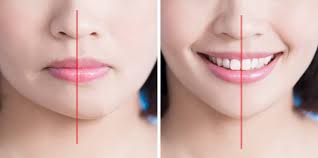
Growth & Facial Asymmetry: When to Worry
Only a few dentists can notice it and realize the asymmetry can signal an underlying skeletal imbala...
Article
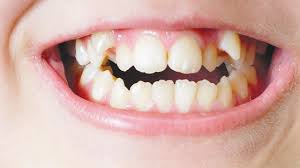
Tooth Eruption & Space Management: What Orthodontists Should Watch For
Tooth eruption may not alwaxfys fit the predictable biological timeline. A delayed or ecto...
Article
Communication & Referral Timing: Getting It Right
You have identified a problem, maybe a severe Class III malocclusion in a 9-year-old, or it is an im...
Article
Rotary File Fatigue – How to Prevent Separation?
File breakage in maxillary molars is not a rare sight, but definitely no less than a nightmare. But...
Article
Modern Irrigation Activation: Ultrasonic vs Sonic vs Laser
After shaping the canal, irrigation determines whether bacteria will stay or be washed away. ...