Article
Treatment Algorithms for Peri-Implant Mucositis and Peri-Implantitis
You can prevent most peri-implant disease. But once it develops, treatment becomes less predictable.
The 2024 AO/AAP Consensus just published evidence-based treatment algorithms that tell you exactly when to use nonsurgical approaches, when to opt for surgery, and what outcomes you can expect in the real world.
Here is the stepwise approach backed by systematic review of the literature.
Reality Check
Treating peri-implant diseases is less predictable than treating periodontitis, which is why prevention is critical. But once the disease develops, you need a systematic approach.
The consensus breaks treatment into three pathways based on disease severity and anatomy.
Pathway 1: Peri-Implant Mucositis
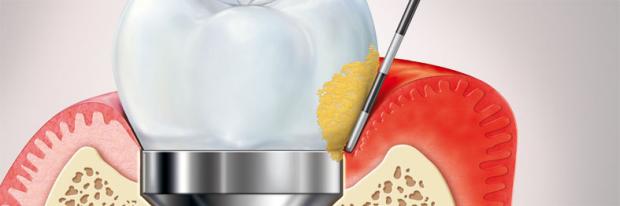
Peri-implant mucositis is mainly reversible inflammation and can be effectively managed1.
Initial treatment:
- Mechanical biofilm removal with appropriate instruments
- Focus on patient's oral hygiene routine
- Address modifiable risk factors like smoking or hygiene compliance
Timing: Reassess outcomes 2-3 months after treatment, and consider repeated intervention if treatment is unsuccessful.
What evidence shows? Adjunctive therapies like antiseptics or antibiotics may help reduce biofilm, but mechanical debridement plus risk-control remains first-line.
Clinical action: Don’t overcomplicate things; remember that just mechanical debridement works. Don't go in for unnecessary adjuncts unless there is a specific indication.
Pathway 2: Early to Moderate Peri-Implantitis
Nonsurgical treatment is mostly the first step for peri-implantitis treatment, but it is not sufficient in most cases.
Initial nonsurgical phase:
- Thorough mechanical debridement may require local anesthesia
- Address prosthetic factors, such as removing cement or modifying contours if needed
- Focus on risk factor control
- Consider adjunctive local or systemic antimicrobials based on the severity of the disease
When to escalate to surgery? If nonsurgical treatment fails to resolve inflammation or reduce pocket depths after continuous efforts, it is advised to go for surgical intervention.
Pathway 3: Advanced Peri-Implantitis
More advanced cases require specific surgical approaches, such as flap-for-access, resective, reconstructive, or soft tissue augmentation.
Surgical options based on defect anatomy:
Access flap surgery:
- Done to resolve inflammation and eventually arrest the disease.
- Provides direct access to help with decontamination
- Usually done when reconstructive surgery is not feasible for some reason
Resective surgery:
- Done to create clean anatomy via implantoplasty or by osseous recontouring
- Best suited for supracrestal defects or exposed threads
Reconstructive surgery:
- Done to regenerate bone and achieve reosseointegration
- Indicated for intraosseous defects that are more than 3mm in depth
- Uses bone grafts with barrier membranes if required
What evidence shows? Reconstructive surgery does not showcase significant improvement when compared to access flap surgery at 12 months. There is not much evidence supporting the superiority of augmentative techniques.
Clinical reality: Only a small percentage of cases achieve complete peri-implantitis resolution with any treatment modality.
When to Consider Explantation?
Implant removal can be considered in cases of advanced bone loss around implants.
Indicators for removal:
- Severe bone loss, which is more than almost 50% of the implant length
- Mobility
- Prosthetically unrestorable
- Patient is unable to maintain
- Implant is not functionally critical
The Non-Negotiables
Supportive peri-implant maintenance is an absolutely mandatory for long-term tissue stability and health.
Every treated implant needs:
- Regular professional biofilm removal
- Reinforcement of home care
- Monitoring for disease recurrence
- Frequency based on individual risk profile, usually every 3-4 months
Final Takeaway
The 2024 AO/AAP Consensus gives you a stepwise, evidence-based approach to managing peri-implant diseases.
It starts with nonsurgical treatment for all cases and needs to go down the surgery lane when nonsurgical fails or when the disease is advanced. Choose surgical approaches according to defect anatomy and treatment goals, and not just marketing hype.
But here is the bitter truth: even with the best treatments, complete disease resolution is unlikely. Hence, prevention is the real hero here.
Try to identify the disease early and treat it systematically. Maintain rigorously. And know when explantation is the most suitable treatment option.
References
- Ramanauskaite A, Schwarz F. Current concepts for the treatment of peri-implant disease. Int J Prosthodont. 2024 Apr 22;37(2):124–34.
- Wang HL, Avila-Ortiz G, Monje A, Kumar P, Calatrava J, Aghaloo T, et al. AO/AAP consensus on prevention and management of peri-implant diseases and conditions: Summary report. J Periodontol. 2025;96(6):519-86.
- Fiorellini JP, Mojaver S, Sarmiento H, Aghaloo T. Clinical translation of the 2024 AO/AAP Consensus on prevention and management of peri-implant diseases and conditions. Int J Periodontics Restorative Dent. 2025;45(4):1-23.
Related Contents
Article
Prosthetic Design Factors That Prevent Peri-Implant Bone Loss
You placed the implant perfectly. Osseointegration was flawless. But three years later, there is 3mm...
Article
Implant Surface Decontamination: What Actually Works
Treating peri-implantitis starts with one critical step, which is decontaminating the implant surfac...
Article
Growth & Facial Asymmetry: When to Worry
Only a few dentists can notice it and realize the asymmetry can signal an underlying skeletal imbala...
Article
Orthodontic Red Flags Every Dentist Should Recognize: Functional Habits and Airway Cues
Some malocclusions cases stall for reasons you can’t see on a scan, as not...
Article
Tooth Eruption & Space Management: What Orthodontists Should Watch For
Tooth eruption may not alwaxfys fit the predictable biological timeline. A delayed or ecto...
Article
Communication & Referral Timing: Getting It Right
You have identified a problem, maybe a severe Class III malocclusion in a 9-year-old, or it is an im...
Article
Rotary File Fatigue – How to Prevent Separation?
File breakage in maxillary molars is not a rare sight, but definitely no less than a nightmare. But...
Article
Modern Irrigation Activation: Ultrasonic vs Sonic vs Laser
After shaping the canal, irrigation determines whether bacteria will stay or be washed away. ...