
Article
AI Applications in Dental Diagnostics and Treatment Planning
Artificial Intelligence (AI) is now transforming dentistry with accurate early diagnosis, advanced treatment planning, saving chairside time, and improving patient care. AI Technologies has enabled dentists to easily analyze the various forms of imaging and take better patient-centric treatment decisions for better outcomes1.
AI in Dental Diagnosis
1. Diagnostic Accuracy Rate is Higher: Evidence collected from nearly 20AI models revealed that these tools can identify dental problems with an accuracy of around 82% especially for caries detection. These findings are usually based on artificial neural Networks (ANNs) and convolutional neural networks (CNNs) frameworks. In comparison with traditional methods, these models have significantly improved the diagnostic precision for dental caries 1.
2. Better Caries Detection on Radiograph: It has been found in the clinical trial involving 22 dentists that by using AI in proximal caries detection, sensitivity increased from 0.72 (without AI) to 0.81. Specificity was also not affected 2.
3. Early Detection of Caries and Periodontal Disease: Study Shows that AI-aided diagnostic tools help in the early detection of dental diseases. From 2020 to 2024, several studies demonstrated that AI models can identify periodontal disease with an accuracy of up to 94.4% and detect caries with 88-96% sensitivity 3.
4. AI for CBCT in Dentistry: CBCT has emerged as an essential diagnostic tool in dentistry. With the most recent development in AI techniques, CBCT has shown significant improvement in terms of its diagnostic values, accuracy, and efficiency. AI has been used for lesion detection, measurement of buccal bone thickness, and classification and segmentation of teeth, alveolar bone, and pharyngeal airways using CBCT images4.
5. Stroner AI Model Through Benchmark: In 2023, the Dental Enumeration and Diagnosis on Panoramic X-Ray (DENTEX) challenge was introduced. To train AI for abnormal tooth detection and diagnosis, it has created a large panoramic X-ray dataset 5.
6. Confirmed Benefits Through Meta-Analysis: A Research Study has been conducted to find out the sensitivity, accuracy, and specificity of AI systems on various types of dental X-rays. The study has confirmed that AI often performs better than conventional methods in detecting early caries 6.
7. AI in Oral Cancer Screening: AI-based diagnosis can efficiently analyze the vast quantity of data, like intraoral images, radiographs, and advanced imaging. It also accurately differentiates between benign and malignant lesions, minimizing unnecessary biopsies and patient discomfort 7.
How AI Assist in Treatment Planning
By offering innovative solutions, AI is enhancing the diagnostic capabilities and treatment planning in dentistry. The AI treatment plan had a higher success rate of 87% compared to 82% for traditional methods 8.
AI facilitates a customized treatment plan, improves clinical outcomes, and patient satisfaction by analyzing extensive dental records, X-rays, and 3D scans 9. It helps in
Predicting outcome
- AI supports the visualization of treatment outcomes and facilitates decision-making during treatment 10.
Orthodontics:
- An advanced multimodal fusion system enables AI to combine CBCT and IOS data for orthodontic treatment monitoring. It allows orthodontists to track root movement and jawbone remodeling. It does not require a repeated CBCT Scan11.
- AI can predict root movement trajectories, identify regions of excessive stress, and recommend orthodontists to plan a treatment strategy for better outcomes11.
Implantology and Prosthodontics:
- AI Plays a crucial role in data management, diagnosis, and treatment planning in implantology and prosthodontics by utilizing various AI models and machine learning algorithms12.
- Robotic-assisted systems help improve efficiency, precision, and accuracy in implant placement12.
- AI supports clinicians in planning prosthetic and implant treatment effectively by predicting successful treatment outcomes12.
Practical Limitations to Keep in Mind 13
- Trained on a limited population, many AI tools may not be suitable for every patient.
- Use of patient data requires consent and strict protection
- Because of improper training in AI, misinterpretation of serious conditions can be risky and may increase the workload of professionals.
- Complete dependency on AI could be harmful.
How Dentists Can Start Using AI Wisely
- Selecting validated AI tools through clinical studies is crucial for correct and effective treatment.
- Gradual integration of AI into dental education, and starting with a specific task, will provide information regarding its applications and limitations.
- To ensure effective and ethical integration into clinical practices, proper education of the dental team and technicians about the usage of AI tools is essential.
- Utilize AI to organize patient data, improve the reliability and accuracy of clinical records, and support better treatment decisions.
Final Takeaway
Use of AI not only improves diagnostic, treatment, and patient management planning but also enhances efficiency, accuracy, and decision-making power in clinical practice. Remember, AI cannot replace the human touch in dentistry. So, thoughtful use of AI and staying updated with the current advancements is crucial for better treatment outcomes.
References:
- Khattak O, Hashem AS, Alqarni MS, Almufarrij RA, Siddiqui AY, Anis R, Ahmad S, Fareed MA, Alothmani OS, Alkhershawy LH, Alabidin WW. Deep Learning Applications in Dental Image-Based Diagnostics: A Systematic Review. InHealthcare 2025 Jun 18 (Vol. 13, No. 12, p. 1466). MDPI.
- Luke AM, Rezallah NN. Accuracy of artificial intelligence in caries detection: a systematic review and meta-analysis. Head & face medicine. 2025 Apr 4;21(1):24.
- Mertens S, Krois J, Cantu AG, Arsiwala LT, Schwendicke F. Artificial intelligence for caries detection: randomized trial. Journal of dentistry. 2021 Dec 1;115:103849.
- Saleem A. USE OF AI POWERED DIAGNOSTICS IN EARLY DETECTION OF CARIES AND PERIODONTAL DISEASE. Journal of Medical & Health Sciences Review. 2025 May 5;2(2).
- Sarwar S, Jabin S. AI techniques for cone beam computed tomography in dentistry: trends and practices. In2023 International Conference on Recent Advances in Electrical, Electronics & Digital Healthcare Technologies (REEDCON) 2023 May 1 (pp. 226-231). IEEE.
- Hamamci IE, Er S, Simsar E, Yuksel AE, Gultekin S, Ozdemir SD, Yang K, Li HB, Pati S, Stadlinger B, Mehl A. Dentex: An abnormal tooth detection with dental enumeration and diagnosis benchmark for panoramic x-rays. arXiv preprint arXiv:2305.19112. 2023 May 30.
- Kharche A, Mathur A, Mehta V. AI-powered oral cancer detection: A breakthrough in dental diagnostics. Oral Oncology Reports. 2024 Jun 1;10:100293.
- Younus DA, Aleem DA, Waqar DZ, Bokhari DS, Islam DS, Khan DN. Investigating the role of artificial intelligence in dental diagnostics and treatment planning—A comparative study. J. Popul. Ther. Clin. Pharmacol. 2024;31:2362-72.
- Olawade DB, Leena N, Egbon E, Rai J, Mohammed AP, Oladapo BI, Boussios S. AI-Driven Advancements in Orthodontics for Precision and Patient Outcomes. Dentistry Journal. 2025 Apr 30;13(5):198.
- Kazimierczak N, Kazimierczak W, Serafin Z, Nowicki P, Nożewski J, Janiszewska-Olszowska J. AI in orthodontics: Revolutionizing diagnostics and treatment planning—A comprehensive review. Journal of clinical medicine. 2024 Jan 7;13(2):344.
- Guo X, Shao Y. AI-Driven Dynamic Orthodontic Treatment Management: Personalized Progress Tracking and Adjustments-A Narrative Review. Frontiers in Dental Medicine. 2025 Aug 1;6:1612441.
- Karnik AP, Chhajer H, Venkatesh SB. Transforming Prosthodontics and oral implantology using robotics and artificial intelligence. Frontiers in Oral Health. 2024 Jul 29;5:1442100.
- Kadam SJ, Guttikonda KV, Guttikonda BR. Benefits and Challenges of Use of Artificial Intelligence in Oral Health Issues of Pediatric Patients. Journal of Orofacial Research. 2024;13(3):17-9.
Related Contents
Video
Management of Traumatic Tooth Avulsion: When & How?
Traumatic tooth avulsion is a true dental emergency requiring immediate and structured management to...
Article
Prosthetic Design Factors That Prevent Peri-Implant Bone Loss
You placed the implant perfectly. Osseointegration was flawless. But three years later, there is 3mm...
Article
Treatment Algorithms for Peri-Implant Mucositis and Peri-Implantitis
You can prevent most peri-implant disease. But once it develops, treatment becomes less predictable....
Article
Implant Surface Decontamination: What Actually Works
Treating peri-implantitis starts with one critical step, which is decontaminating the implant surfac...
Article
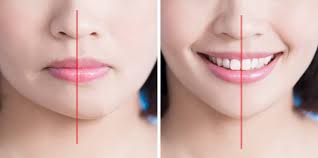
Growth & Facial Asymmetry: When to Worry
Only a few dentists can notice it and realize the asymmetry can signal an underlying skeletal imbala...
Article
Orthodontic Red Flags Every Dentist Should Recognize: Functional Habits and Airway Cues
Some malocclusions cases stall for reasons you can’t see on a scan, as not...
Article
Tooth Eruption & Space Management: What Orthodontists Should Watch For
Tooth eruption may not alwaxfys fit the predictable biological timeline. A delayed or ecto...
Article
Communication & Referral Timing: Getting It Right
You have identified a problem, maybe a severe Class III malocclusion in a 9-year-old, or it is an im...