Article
Social Media in Aesthetic Dentistry: Hype vs. Reality
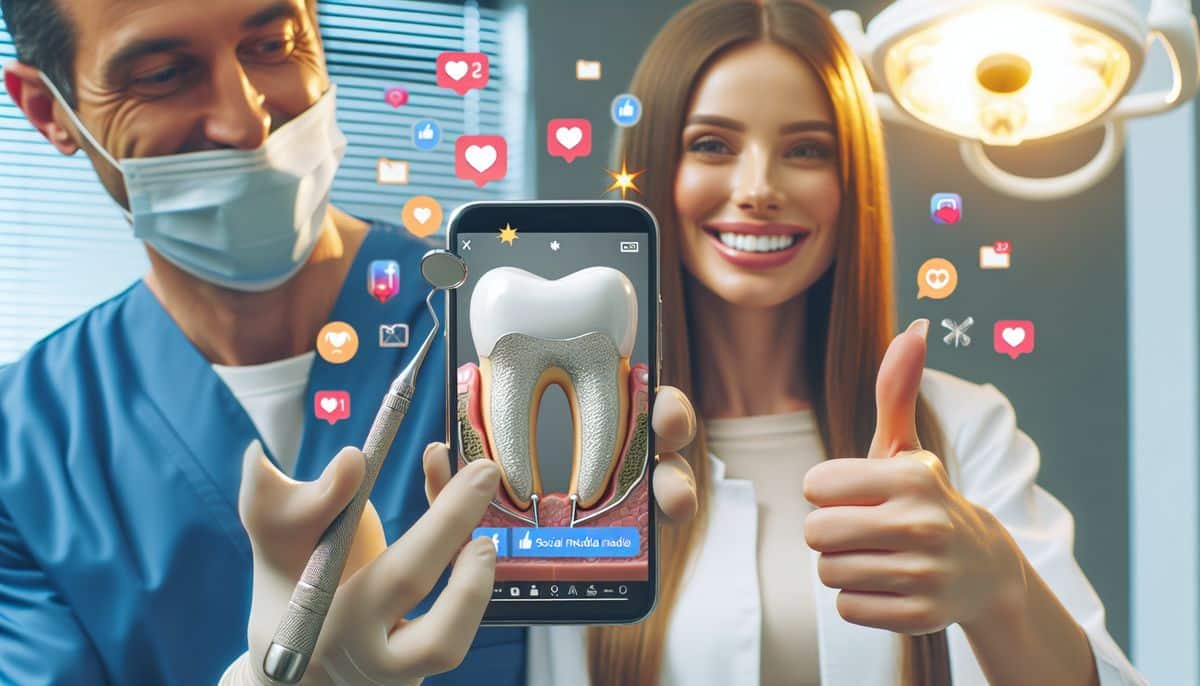
Social media is no longer just a tool for connecting with friends; it is now a powerful driver of patient choices in healthcare. For aesthetic dentistry in particular, Instagram and Facebook have transformed how patients discover treatments, clinics, and eventually decide on procedures.
For dentists, it provides an opportunity and a responsibility to harness these platforms and showcase expertise, build trust, and ethically educate patients.
Why Social Media is Driving the Boom in Aesthetic Dentistry?
Over the last decade, demand for smile makeovers has definitely surged, and social media is a huge driver.
Patients don’t just want a service; they want to see proof, hear stories, and imagine themselves in the “after” photo. A single scroll through Instagram can inspire someone to book whitening, veneers, or even full-mouth rehabilitation.
In fact, a 2024 study found that 29.4% of patients who pursued aesthetic dental treatments reported influence of social media content in their decision, especially visuals shared by clinics and dentists1.
Trust vs. Misinformation
Trust matters more than ever. Recent research showed that almost 62.5% of respondents preferred receiving dental health information via social media, and 36.7% said they trust only content from dentists or people they know2.
On the other hand, misinformation is a growing challenge. A content analysis revealed that 86.8% of posts about oral health treatments were misleading3.
This gap creates an opportunity for dental professionals to provide authentic, evidence-based information.
What’s Trending: From Hashtags to High Demand?
- Most popular treatments: Teeth whitening consistently leads the pack, followed by veneers and orthodontic treatments, which are heavily driven by visual content.
- Engaged demographic: Women in their late 20s to mid-30s are often the most active audience for aesthetic dentistry content online. Instagram remains the leading platform, with Facebook following close behind.
- The ethics dilemma: Even dental students are not immune to influence. Studies show that exposure to social media can shape how future professionals view cosmetic treatments4.
Beyond Posting: Educate, Engage, Convert
Posting before-and-after photos is no longer enough. Clinics that stand out are those that educate and engage, not just advertise.
- Education wins: Studies show that educational posts (explaining treatment options, sharing preventive tips) consistently outperform purely promotional ones on engagement metrics.
- Show your process: Videos of procedures, behind-the-scenes stories, and Q&A sessions help humanize your practice and build trust.
- Know your audience: Tailor content for your most engaged demographic. Short-form video and interactive posts perform especially well.
Social media isn’t just about likes; it’s a patient education channel that shapes treatment expectations.
The Ethics Challenge: Influence vs. Integrity
The rise of social platforms brings a unique challenge and makes one wonder how much influence is too much? Studies show that patients and even dental students are swayed by what they see online. For practitioners, this means balancing confidence in marketing with a commitment to accurate, responsible communication.
Your post shouldn’t just inspire, it should also inform. Building authority in aesthetic dentistry is not about showing the perfect smile, but about showing the truth behind it.
Key Takeaways for Dental Professionals
- Be visible, but stay credible. Patients are looking to you for trustworthy information.
- Prioritize education. Share authentic, fact-based content that addresses patient concerns.
- Leverage platforms strategically. Focus on Instagram and Facebook, where your most engaged demographics are.
- Mind the ethics. Avoid exaggeration; long-term credibility matters more than short-term clicks.
References
- Freire Y, Gómez Sánchez M, Sánchez Ituarte J, Frías Senande M, Díaz-Flores García V, Suárez A. Social media impact on students’ decision-making regarding aesthetic dental treatments based on cross-sectional survey data. Sci Rep. 2024 Sep 16;14:21626. doi:10.1038/s41598-024-63341-9.
- Alhuzili G, Alghamdi A, Alhazmy R, Abdullah H, Sembawa S, Khayat W. The impact of social media posts concerning esthetic dentistry on self-esteem and satisfaction among adults in Saudi Arabia. Open Dent J. 2022 Mar 28;16:e187421062202141.
- Alfaraj A, Alshahrani FA, Albalawi M, AlQahtani N, Alhajji M, Alharbi AS, Ainoosah S, Al-Khalifa KS. Misinformation or education? A comparative analysis of Instagram posts related to full mouth rehabilitation. Front Dent Med. 2025 Jul 24;6:1585575.
- Freire Y, Gómez Sánchez M, Sánchez Ituarte J, Frías Senande M, Díaz-Flores García V, Suárez A. Social media impact on students' decision-making regarding aesthetic dental treatments based on cross-sectional survey data. Sci Rep. 2024;14(1):21626.
Related Contents
Video
Management of Traumatic Tooth Avulsion: When & How?
Traumatic tooth avulsion is a true dental emergency requiring immediate and structured management to...
Article
Prosthetic Design Factors That Prevent Peri-Implant Bone Loss
You placed the implant perfectly. Osseointegration was flawless. But three years later, there is 3mm...
Article
Treatment Algorithms for Peri-Implant Mucositis and Peri-Implantitis
You can prevent most peri-implant disease. But once it develops, treatment becomes less predictable....
Article
Implant Surface Decontamination: What Actually Works
Treating peri-implantitis starts with one critical step, which is decontaminating the implant surfac...
Article
Growth & Facial Asymmetry: When to Worry
Only a few dentists can notice it and realize the asymmetry can signal an underlying skeletal imbala...
Article
Orthodontic Red Flags Every Dentist Should Recognize: Functional Habits and Airway Cues
Some malocclusions cases stall for reasons you can’t see on a scan, as not...
Article
Tooth Eruption & Space Management: What Orthodontists Should Watch For
Tooth eruption may not alwaxfys fit the predictable biological timeline. A delayed or ecto...
Article
Communication & Referral Timing: Getting It Right
You have identified a problem, maybe a severe Class III malocclusion in a 9-year-old, or it is an im...