Article
Buffered Local Anesthesia: Is It Worth the Hype?
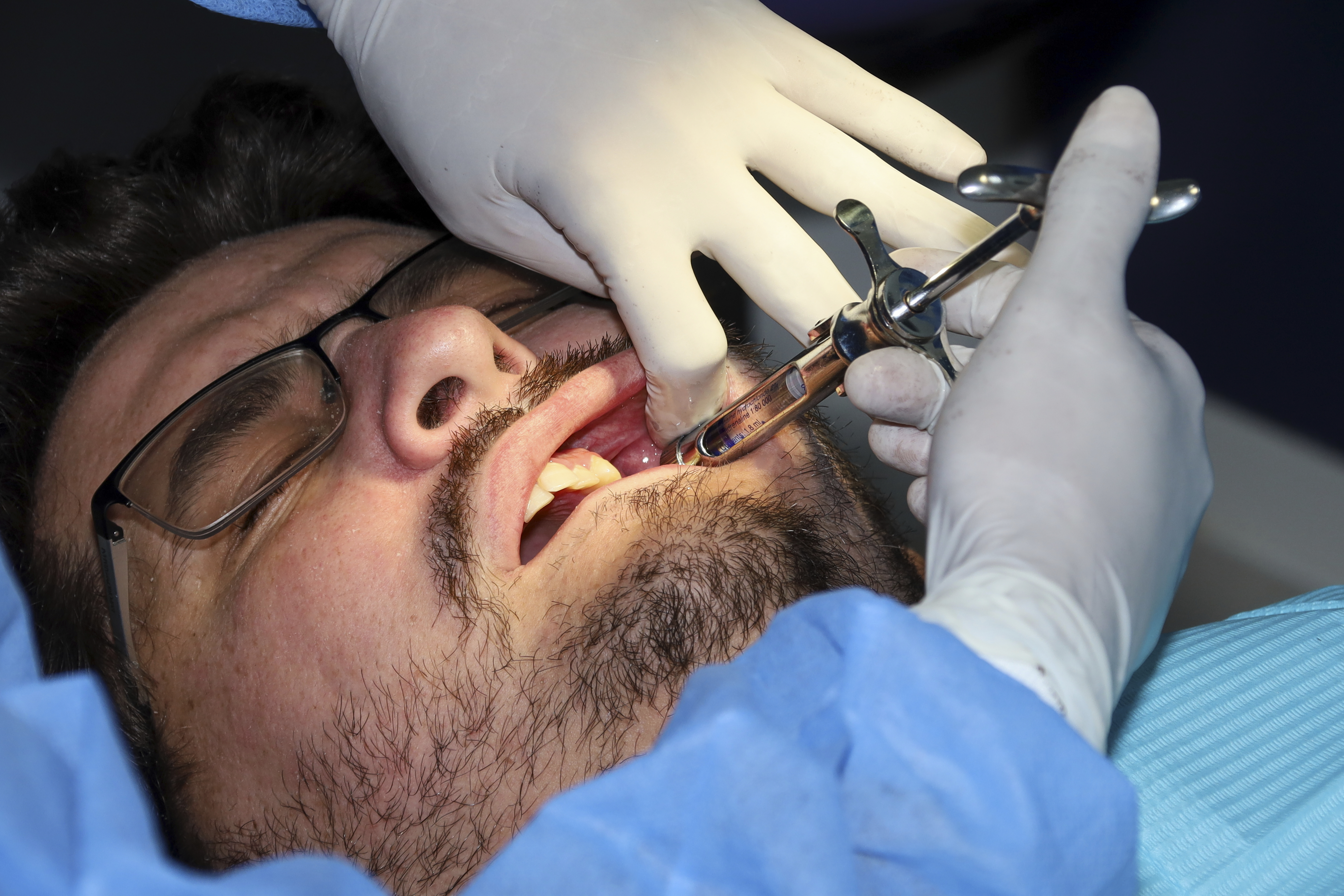
Buffering local anesthetic by adding sodium bicarbonate to raise pH is becoming more common among dental clinicians aiming for less pain and faster onset.
But does the evidence support making this a routine part of practice?
Well, here is a clinically relevant guide based on the latest research.
The Science of Buffering
Standard lidocaine and articaine cartridges are acidic (pH ~3.5–5.5) to preserve epinephrine.
Buffering with sodium bicarbonate raises the pH near physiologic (~7.4), which increases the non-ionized anesthetic available for nerve penetration. This change reduces the "burn" during injection and accelerates the onset1.
What Research Shows?
A. IANB in Adults
- Buffered lidocaine achieved faster onset (~48 s) and less injection pain (~5 VAS points) compared to non-buffered options2.
- However, the success rates of profound anesthesia remained statistically similar.
B. Buffered Articaine for Mandibular Infiltration
- A 2023 clinical trial (63 volunteers) showed buffered 4% articaine had a significantly faster onset (4.5 ± 1.6 min vs. 6.6 ± 1.6 min, P=0.001) and lower injection pain (7.8 mm vs. 11.3 mm VAS, P=0.001), though anesthetic success was comparable3.
C. Buffered Articaine in Maxilla
- A 2015 trial comparing buffered vs. non-buffered 4% articaine for first molar infiltration found no difference in onset or pain, suggesting tissue variability matters4.
D. Pediatric Block in Primary Molars
- Controlled pediatric RCT demonstrated that warmed or buffered 2% lidocaine reduced pain and improved onset/duration in children’s IANBs5.
Chairside Buffering: How to Do It?
Manual Mixing (Easy DIY):
- Withdraw about 0.18 mL from a 1.8 mL LA cartridge, replace with 0.18 mL of 8.4% sodium bicarbonate (a 10:1 ratio)6.
- Mix gently and eliminate air bubbles before injection.
Pre‑Buffered Systems:
Pre-buffered delivery systems allow chairside buffering of local anesthetics in seconds, without manual mixing or syringe changes.
Tools like OnPharma Onset Pen and Anutra streamline the process by incorporating buffering mechanisms directly and improve efficiency and consistency.
Practical tips:
- Use buffered cartridges within 24 hours, as they degrade faster.
- Always expel air bubbles to prevent any pressure jolts.
- Streamlined with modern devices, buffering adds only 10–15 seconds of chairside time.
When Buffering Makes a Difference?
|
linical Situation |
Buffer Benefit |
Worth It? |
|
Routine block/infiltration |
Slightly faster (≈1 min) |
Optional |
|
Inflamed/hot tooth |
Much faster (≈2 min) |
✔️ Recommended |
|
Anxious or pediatric patients |
Noticeably more comfortable |
✔️ Highly recommended |
|
Volume-oriented clinics |
Shorter appointments |
✔️ Consider |
Final Takeaway
Buffering the local anaesthesia may not guarantee a deeper effect, but it does provide benefits such as faster onset and reduced pain.These benefits are important for inflamed tissues and sensitive patients. Pre-buffered kits offer minimal hassle and position themselves as a smart upgrade for modern practices.
References
- Senthoor P, Janani K, Ravindran C. A prospective, randomized double-blinded study to evaluate the efficacy of buffered local anesthetics in infected and inflamed pulp and periapical tissues. J Maxillofac Oral Surg. 2019;19(2):246–250.
- Guo J, Li Y, Wang Y, Deng Y. Comparison of buffered and non-buffered lidocaine in inferior alveolar nerve block: a meta-analysis. J Dent Anesth Pain Med. 2018;18(3):129–142.
- Roodnick S, Chisci G, Mijiritsky E, Salari A, Shpack N. The effect of buffered versus non-buffered 4% articaine with 1:100,000 epinephrine on mandibular first molar infiltration: A randomized, double-blind, crossover clinical trial. J Dent Sci. 2023;18(3):1047–1054.
- Shurtz R, Nusstein J, Reader A, Drum M, Fowler S, Beck M. Buffered 4% articaine as a primary buccal infiltration of the mandibular first molar: a prospective, randomized, double-blind study. J Endod. 2015 Sep;41(9):1403–1407.
- Kurien RS, Goswami M, Singh S. Comparative evaluation of anesthetic efficacy of warm, buffered and conventional 2% lignocaine for the success of inferior alveolar nerve block (IANB) in mandibular primary molars: A randomized controlled clinical trial. J Dent Res Dent Clin Dent Prospects. 2018;12(2):102–109.
- Malamed SF. Buffering local anesthetics in dentistry. J Am Dent Assoc. 2013 Aug;144(8):867–872.
Related Contents
Video
Management of Traumatic Tooth Avulsion: When & How?
Traumatic tooth avulsion is a true dental emergency requiring immediate and structured management to...
Article
Prosthetic Design Factors That Prevent Peri-Implant Bone Loss
You placed the implant perfectly. Osseointegration was flawless. But three years later, there is 3mm...
Article
Treatment Algorithms for Peri-Implant Mucositis and Peri-Implantitis
You can prevent most peri-implant disease. But once it develops, treatment becomes less predictable....
Article
Implant Surface Decontamination: What Actually Works
Treating peri-implantitis starts with one critical step, which is decontaminating the implant surfac...
Article
Growth & Facial Asymmetry: When to Worry
Only a few dentists can notice it and realize the asymmetry can signal an underlying skeletal imbala...
Article
Orthodontic Red Flags Every Dentist Should Recognize: Functional Habits and Airway Cues
Some malocclusions cases stall for reasons you can’t see on a scan, as not...
Article
Tooth Eruption & Space Management: What Orthodontists Should Watch For
Tooth eruption may not alwaxfys fit the predictable biological timeline. A delayed or ecto...
Article
Communication & Referral Timing: Getting It Right
You have identified a problem, maybe a severe Class III malocclusion in a 9-year-old, or it is an im...