Article
Space Maintainers & Interceptive Ortho Made Practical
Premature loss of primary teeth is one of the most common challenges in pediatric dentistry. It can lead to space loss, crowding, malocclusion, and ultimately ortho treatments later in life1.
The fix is very simple, theoretically, just give a space maintainer. But how many dentists actually deliver space maintainers?
The usual concerns are poor compliance, failures, or simply confusion about appliance choice.
So, here is a simplified guide to help make the right choice.
Picking the Right Space Maintainer
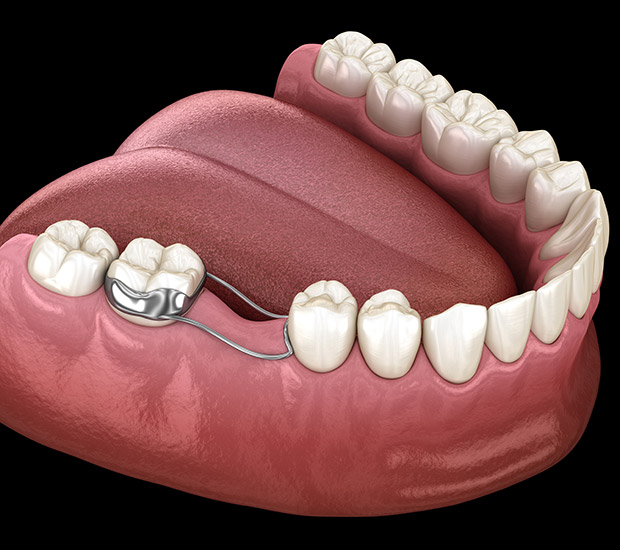
Band and Loop
- Indicated for single posterior primary molar loss.
- The band and loop space maintainer is simple, reliable, and does not necessarily need too much compliance2.
- Generally well-tolerated and is the most suitable when the permanent tooth is expected in 2-3 years.
Distal Shoe
- Ideal in case of loss of the second primary molar before eruption of the first permanent molar.
- Guides the eruption of the permanent tooth.
- Requires regular follow-up, hence should be avoided in immunocompromised or uncooperative children.
Lingual Arch / Nance
- Ideal for bilateral loss of molars in children.
- Known to provide long-term arch preservation3.
- Requires excellent hygiene and regular review.
Clinical pearl: Always check root resorption of adjacent teeth before prescribing a fixed appliance. Most failures happen due to poor case selection.
How to Integrate Space Maintainers in Daily Practice?
- Fabrication: CAD-CAM maintainers are quickly becoming a game-changer in the field of interceotive orthodoctics. They are supposedly more accurate and require fewer lab visits. Prefabricated band-loop kits can cut chairside time, thereby increasing efficacy4.
- Review: Regular follow-ups every 3–6 months are mandatory. Most failures occur due to neglect, and not the appliance itself.
- Parent instructions: It is important to educate parents about avoiding sticky foods, brushing appliance margins, and reporting immediately if it feels loose. A printed or WhatsApp care card with all instructions in one place improves compliance.
- Hygiene hack: Apply fluoride varnish around band margins at recall to minimise any decalcification
Interceptive Ortho: When to Act Early?
Space maintainers are a great option to preserve arch length, but malocclusion needs more than that.
Here is how you can proceed:
- Screening age: Screen children at the age of 6–7 years when the eruption of the first permanent molars and incisors occurs.
- Red flags: Notice if there are any upcoming malocclusions, like posterior crossbite, severe crowding, ectopic eruption, or habits like thumb sucking or mouth breathing.
- Interceptive tools: Suggest simple expanders for crossbite, habit-breaking appliances, or serial extractions where crowding is severe5.
Pro Tip: If the developing issue looks like it cannot be controlled with a single appliance, refer early rather than waiting.
Final Takeaway
Space maintenance and interceptive ortho are preventive orthodontics, and these are not optional. Guide more children and parents about space maintainers, as it can help avoid lengthy ortho procedures later on.
Additionally, hand out more information about dietary advice, hygiene protocols, and timely ortho referral.
References
- Shakti P, Singh A, Purohit BM, Purohit A, Taneja S. Effect of premature loss of primary teeth on prevalence of malocclusion in permanent dentition: A systematic review and meta-analysis. Int Orthod. 2023 Dec;21(4):100816.
- Casaña-Ruiz MD, Aura-Tormos JI, Marques-Martinez L, Garcia-Miralles E, Perez-Bermejo M. Effectiveness of Space Maintainers in Pediatric Patients: A Systematic Review and Meta-Analysis. Dent J (Basel). 2025 Jan 14;13(1):32.
- Khalaf K, Mustafa A, Wazzan M, Omar M, Estaitia M, El-Kishawi M. Clinical effectiveness of space maintainers and space regainers in the mixed dentition: A systematic review. Saudi Dent J. 2022 Feb;34(2):75-86.
- Dhanotra KGS, Bhatia R. Digitainers—Digital Space Maintainers: A Review. Int J Clin Pediatr Dent. 2021;14(Suppl 1):S69–S75.
- Khalaf K, Mustafa A, Wazzan M, Omar M, Estaitia M, El-Kishawi M. Clinical effectiveness of space maintainers and space regainers in the mixed dentition: A systematic review. Saudi Dent J. 2022 Feb;34(2):75-86.
Related Contents
Video
Management of Traumatic Tooth Avulsion: When & How?
Traumatic tooth avulsion is a true dental emergency requiring immediate and structured management to...
Article
Prosthetic Design Factors That Prevent Peri-Implant Bone Loss
You placed the implant perfectly. Osseointegration was flawless. But three years later, there is 3mm...
Article
Treatment Algorithms for Peri-Implant Mucositis and Peri-Implantitis
You can prevent most peri-implant disease. But once it develops, treatment becomes less predictable....
Article
Implant Surface Decontamination: What Actually Works
Treating peri-implantitis starts with one critical step, which is decontaminating the implant surfac...
Article
Growth & Facial Asymmetry: When to Worry
Only a few dentists can notice it and realize the asymmetry can signal an underlying skeletal imbala...
Article
Orthodontic Red Flags Every Dentist Should Recognize: Functional Habits and Airway Cues
Some malocclusions cases stall for reasons you can’t see on a scan, as not...
Article
Tooth Eruption & Space Management: What Orthodontists Should Watch For
Tooth eruption may not alwaxfys fit the predictable biological timeline. A delayed or ecto...
Article
Communication & Referral Timing: Getting It Right
You have identified a problem, maybe a severe Class III malocclusion in a 9-year-old, or it is an im...