
Article
Oral Cancer Rehabilitation Made Practical: Pro-Tips Every Dentist Should Know
Treating oral cancer patients is one of the most complex challenges in dentistry. Beyond managing teeth, dentists must prevent complications, restore chewing and speech, and rebuild patients’ confidence and facial aesthetics—all while coordinating with surgeons, oncologists, and therapists.
The scale of the problem in India makes it even more critical: 77,000 new cases and 52,000 deaths occur every year, representing nearly one-quarter of the world’s oral cancer burden¹. Shockingly, 70% of patients are diagnosed at advanced stages, where survival can drop to 20%¹,3. Oral cancer is the second most common cancer in men and the fourth in women², highlighting the urgent need for early detection and comprehensive rehabilitation.
1. Early Planning: Begin Before Treatment
Effective rehabilitation starts before oncologic treatment:
- Pre-treatment dental evaluation: Identify and manage infections, extract high-risk teeth, and reduce the risk of complications such as osteoradionecrosis⁴.
- Preservation of natural dentition: Maintaining as much natural tooth structure as possible ensures better outcomes for future prosthetic rehabilitation⁵.
Pro-Tips:
- Collaborate early with the oncologist to align dental extractions and treatment timing.
- Take detailed dental impressions and photographs before treatment—they can guide prosthetic planning later.
2. During Treatment: Minimizing Oral Morbidity
Surgery, radiotherapy, and chemotherapy often lead to significant oral complications. Dentists play a key role in reducing morbidity during treatment:
- Manage mucositis, xerostomia, and infections using topical agents, fluoride trays, and structured oral hygiene protocols⁶.
- Prevent trauma by removing or adjusting prostheses as needed.
- Support nutrition and hydration through coordination with dietitians, particularly when swallowing is compromised⁷.
Pro-Tips:
- Introduce daily gentle oral rinses to reduce mucosal irritation.
- Use custom fluoride trays for at-risk teeth to minimize decay during radiation.
- Provide patient-friendly oral care kits that simplify hygiene for compromised patients.
3. Surgical and Prosthetic Rehabilitation
Reconstruction is essential for restoring function after oral cancer treatment:
- Obturator prostheses: Restore separation between oral and nasal cavities following maxillectomy, improving speech and swallowing⁸.
- Soft tissue and bone-free flaps: Techniques such as fibula or anterolateral thigh free flaps reconstruct extensive mandibular defects, facilitating prosthetic rehabilitation and enhancing functional outcomes⁹.
Pro-Tips:
- Take an early referral to a maxillofacial prosthodontist; timely prosthetic planning enhances outcomes.
- Use digital scanning and 3D printing to create precise prostheses that reduce fitting time and discomfort.
- Document pre-surgery occlusion and facial landmarks to guide accurate post-surgical restoration.
4. Long-Term Functional Support
Post-treatment care ensures sustained functional recovery:
- Speech and swallowing therapy: Retrains articulation and compensates for deficits in tongue or palate function¹⁰.
- Physiotherapy: Addresses trismus, fibrosis, and muscular weakness, improving comfort and mobility¹¹.
Pro-Tips:
- Encourage early and regular physiotherapy to prevent long-term stiffness or fibrosis.
- Provide home exercise guides for jaw, tongue, and swallowing exercises.
- Schedule periodic speech evaluations to monitor progress and adapt to therapy.
5. Aesthetics, Psychology, and Quality of Life
Oral cancer impacts appearance, confidence, and social interactions. Dentists should:
- Design prosthetics that restore facial symmetry, lip support, and smile aesthetics.
- Support psychological well-being through counseling, patient education, and support groups¹².
- Monitor long-term outcomes to detect recurrence early and adapt rehabilitation plans accordingly.
Pro-Tips:
- Use patient-preferred colors and materials in prosthetics for better acceptance.
- Engage family members in the rehabilitation process to enhance emotional support.
- Create visual progress timelines showing improvements—this boosts motivation.
Takeaway Tips for Dentists
Comprehensive oral cancer rehabilitation is multidisciplinary, patient-centered, and proactive. Key points to remember:
- Start early: Rehabilitation should begin before treatment.
- Evidence-based care: Reduce complications and preserve function.
- Holistic support: Address psychological and social needs.
- Collaborate across disciplines: Surgeons, oncologists, dietitians, physiotherapists, and speech therapists ensure optimal outcomes.
Ultimately, rehabilitation is about giving patients more than survival—it’s about confidence, independence, and dignity. With thoughtful planning, proactive interventions, and coordinated care, dentists can transform oral cancer outcomes for their patients.
Reference:
- Borse V, Konwar AN, Buragohain P. Oral cancer diagnosis and perspectives in India. Sensors International. 2020 Jan 1;1:100046.
- Gangane NM, Ghongade PV, Patil BU, Atram M. Oral cavity cancer incidence and survival trends: a population-based study. Journal of Cancer Research and Therapeutics. 2024 Jul 1;20(5):1446-52.
- Gupta B, Ariyawardana A, Johnson NW. Oral cancer in India continues in epidemic proportions: evidence base and policy initiatives. International dental journal. 2013 Feb 1;63(1):12-25.
- Matsuda Y, Jayasinghe RD, Zhong H, Arakawa S, Kanno T. Oral health management and rehabilitation for patients with oral cancer: a narrative review. InHealthcare 2022 May 23 (Vol. 10, No. 5, p. 960). MDPI.
- Petrovic I, Rosen EB, Matros E, Huryn JM, Shah JP. Oral rehabilitation of the cancer patient: A formidable challenge. Journal of surgical oncology. 2018 Jun;117(8):1729-35.
- Skośkiewicz-Malinowska K, Pogoda K, Ziętek M, Jawor N. Oral health management for post-cancer therapy patients. Nowotwory. Journal of Oncology. 2025 Aug 28.
- Kumari J, Sahu RK. Feeding in cancer patients: The collaborative role of nurses and dietitians. RFP Gastroenterol Int. 2023;8(1):9-18.
- Grover R, Jurel SK, Agarwal B, Rao J, Kapoor S, Mishra N, Singh BP. Speech intelligibility, nasal resonance, and swallowing ability of maxillectomy patients with customized obturator: A non randomized controlled study. The Journal of Indian Prosthodontic Society. 2021 Jul 1;21(3):249-55.
- Shin S, Kim K, Woo S, Kim K, Lee J, Kim S, Choi J, Lee D, Suh I. One-stage reconstruction using a fibula osteocutaneous free flap and an anterolateral thigh free flap for an extensive composite defect after en bloc resection of squamous cell carcinoma on the mouth floor, mandible, and anterior neck: A CARE-compliant case report. Medicine. 2023 May 26;102(21):e33786.
- Jain SK, Raj P, Singh SK, Chugh R, Gupta DK, Goyal S. Post-operative speech and swallowing in partial glossectomy patients: role of effective rehabilitation. Int J Otorhinolaryngol Head Neck Surg. 2018 Nov;4:1473-8.
- Kumari VV, Mazhari SD, Kauser MS. Role of rehabilitation in multi disciplinary approach for head and neck cancer patients. IP Indian J Anat Surg Head Neck Brain. 2024;10(2):32-39. doi:10.18231/j.ijashnb.2024.008.
- Arora L, Popat T, Vala D, Shrotriya A, Roy SG, Pradeep C. Psychosocial impact of oral cancer diagnosis and treatment: Role of dental professionals in support and rehabilitation – a narrative review. Acta Scientific Dental Sciences. 2024;8(5):59-64.
Related Contents
Video
Management of Traumatic Tooth Avulsion: When & How?
Traumatic tooth avulsion is a true dental emergency requiring immediate and structured management to...
Article
Prosthetic Design Factors That Prevent Peri-Implant Bone Loss
You placed the implant perfectly. Osseointegration was flawless. But three years later, there is 3mm...
Article
Treatment Algorithms for Peri-Implant Mucositis and Peri-Implantitis
You can prevent most peri-implant disease. But once it develops, treatment becomes less predictable....
Article
Implant Surface Decontamination: What Actually Works
Treating peri-implantitis starts with one critical step, which is decontaminating the implant surfac...
Article
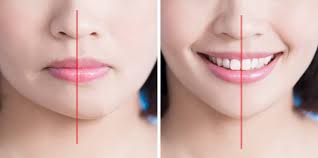
Growth & Facial Asymmetry: When to Worry
Only a few dentists can notice it and realize the asymmetry can signal an underlying skeletal imbala...
Article
Orthodontic Red Flags Every Dentist Should Recognize: Functional Habits and Airway Cues
Some malocclusions cases stall for reasons you can’t see on a scan, as not...
Article
Tooth Eruption & Space Management: What Orthodontists Should Watch For
Tooth eruption may not alwaxfys fit the predictable biological timeline. A delayed or ecto...
Article
Communication & Referral Timing: Getting It Right
You have identified a problem, maybe a severe Class III malocclusion in a 9-year-old, or it is an im...