
Article
Implant Maintenance That Actually Works Long-Term
Dental implants have revolutionised restorative care, with survival rates exceeding a whopping 90% over 10–20 years1.
But survival alone isn’t complete success. What matters is if implants stay functional, inflammation-free, and esthetically stable for the long haul.
More often than not, peri-implantitis, inflammation, or patient neglect jeopardises the dental implant health.
However, long-term success is still a possibility; all it needs is consistent, evidence-based maintenance.
Customized Recall Is Non-Negotiable
One-size-fits-all doesn’t always work. The latest ITI consensus emphasizes that recall intervals should be tailored to risk profiles2:
- Low-risk patients, including non-smokers, patients with healthy periodontium: every 6 months.
- Moderate risk, including controlled diabetes, light smokers, mild peri-implant mucositis history: every 3–4 months.
- High risk, including previous periodontitis, poor compliance, heavy smokers: every 2–3 months.
Frequent reassessment is extremely helpful, especially in the first two years post-placement, as that is the time when most complications arise.
Home Care: Beyond Toothbrush and Floss
Traditional floss alone is not enough around implants. Encourage patients to use:
- Interdental brushes with nylon-coated wire which is safer for titanium surfaces3.
- Superfloss or water flossers for proper cleaning under prosthetic frameworks.
- Low-abrasive toothpaste to prevent scratching abutments.
Emerging evidence also suggests that oral probiotics, such as L. reuteri and may help reduce peri-implant inflammation and improve immune responses in patients with peri-implant diseases4.
Although further research is needed to confirm their effectiveness and establish clear clinical guidelines.
In-Office Care: Gentle but Thorough
The wrong tools can scratch implant surfaces, which in turn can accelerate biofilm retention. Best practices now include:
- Air-polishing with glycine or erythritol powders is safe and effective in biofilm disruption5.
- Titanium or PEEK-coated ultrasonic tips for calculus removal, when needed.
- Implant-specific scalers made of plastic, carbon-fibre, or titanium for non-damaging debridement.
- Avoid steel scalers or abrasive prophy pastes as they can compromise surfaces.
Documentation matters: Make a chart and record probing depths, bleeding on probing, and mobility at each recall, to create a long-term risk map.
Risk Management: The Human Factor
Even the best protocols fail without patient compliance. Factors that demand closer supervision include:
- Smoking alone can double implant failure rates6.
- Uncontrolled diabetes is linked with higher peri-implant bone loss7.
- History of periodontitis may require lifelong supportive care8.
A practical tip: use motivational interviewing techniques instead of generic reminders. Try to motivate them to protect their investment, as it resonates more with patients.
Digital Monitoring: The Future of Follow-Up
AI is moving into the recall process as well. Algorithms trained on CBCT and periapical radiographs can now flag early bone level changes that are otherwise invisible to the human eye9.
Intraoral scanners are also being used for baseline and follow-up soft tissue mapping, which can provide a digital record of subtle mucosal recession10.
These tools will soon give clinicians a more objective way to detect risk early.
Final Takeaway
The truth is, implants don’t fail because of the surgery, it is mostly due to what happens afterwards. Long-term success comes from the small, consistent things. It relies on the tailored recalls, the home-care tools patients actually use, and now, even digital checks.
Prevention isn’t necessarily glamorous, but it’s what keeps implants alive for decades.
References
- Howe MS, Keys W, Richards D. Long-term (10-year) dental implant survival: A systematic review and sensitivity meta-analysis. J Dent. 2019;84:9-21.
- Herrera D, Berglundh T, Schwarz F, Chapple I, Jepsen S, Sculean A, Kebschull M, Papapanou PN, Tonetti MS, Sanz M; EFP Workshop Participants and Methodological Consultant. Prevention and treatment of peri-implant diseases: The EFP S3 level clinical practice guideline. J Clin Periodontol. 2023;50(Suppl 26):4-76.
- AlMoharib HS, AlAskar MH, Abuthera EA, Alshalhoub KA, BinRokan FK, AlQahtani NS, Almadhoon HW. Efficacy of three interdental cleaning methods for peri-implant health maintenance of single implant-supported crowns: a randomised clinical trial. Oral Health Prev Dent. 2024 Jan 15;22: b4854607.
- López-Valverde N, López-Valverde A, Blanco Rueda JA. The role of probiotic therapy on clinical parameters and human immune response in peri-implant diseases: a systematic review and meta-analysis of randomized clinical studies. Front Immunol. 2024;15:1371072.
- Stiller HL, Ionfrida J, Kämmerer PW, Walter C. The Effects of Smoking on Dental Implant Failure: A Current Literature Update. Dent J (Basel). 2024;12(10):311.
- Alberti A, Morandi P, Zotti B, Tironi F, Francetti L, Taschieri S, Corbella S. Influence of Diabetes on Implant Failure and Peri-Implant Diseases: A Retrospective Study. Dent J (Basel). 2020 Jul 4;8(3):70.
- Kim YJ, Song YW, Park SY, Cha JK, Lee HJ, Yang SM, Park JB, Koo KT. Current understanding of the etiology, diagnosis, treatment, and management of peri-implant diseases: a narrative review for the consensus report of the Korean Academy of Periodontology. J Periodontal Implant Sci. 2024 Dec 11;54(6):397-412.
- Kurt-Bayrakdar S, Bayrakdar İŞ, Kuran A, Çelik Ö, Orhan K, Jagtap R. Advancing periodontal diagnosis: harnessing advanced artificial intelligence for patterns of periodontal bone loss in cone-beam computed tomography. Dentomaxillofac Radiol. 2025 May;54(4):268-278.
- Ucer C, Khan RS, Jones G. A novel intraoral optical scan-transfer device for full-arch implant reconstruction. Dent J (Basel). 2025 Mar 19;13(3):134. doi: 10.3390/dj13030134.
Related Contents
Video
Management of Traumatic Tooth Avulsion: When & How?
Traumatic tooth avulsion is a true dental emergency requiring immediate and structured management to...
Article
Prosthetic Design Factors That Prevent Peri-Implant Bone Loss
You placed the implant perfectly. Osseointegration was flawless. But three years later, there is 3mm...
Article
Treatment Algorithms for Peri-Implant Mucositis and Peri-Implantitis
You can prevent most peri-implant disease. But once it develops, treatment becomes less predictable....
Article
Implant Surface Decontamination: What Actually Works
Treating peri-implantitis starts with one critical step, which is decontaminating the implant surfac...
Article
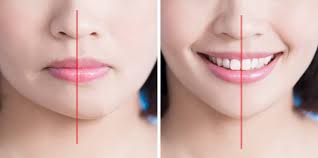
Growth & Facial Asymmetry: When to Worry
Only a few dentists can notice it and realize the asymmetry can signal an underlying skeletal imbala...
Article
Orthodontic Red Flags Every Dentist Should Recognize: Functional Habits and Airway Cues
Some malocclusions cases stall for reasons you can’t see on a scan, as not...
Article
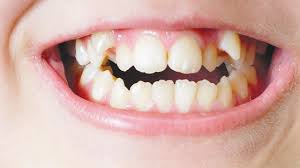
Tooth Eruption & Space Management: What Orthodontists Should Watch For
Tooth eruption may not alwaxfys fit the predictable biological timeline. A delayed or ecto...
Article
Communication & Referral Timing: Getting It Right
You have identified a problem, maybe a severe Class III malocclusion in a 9-year-old, or it is an im...