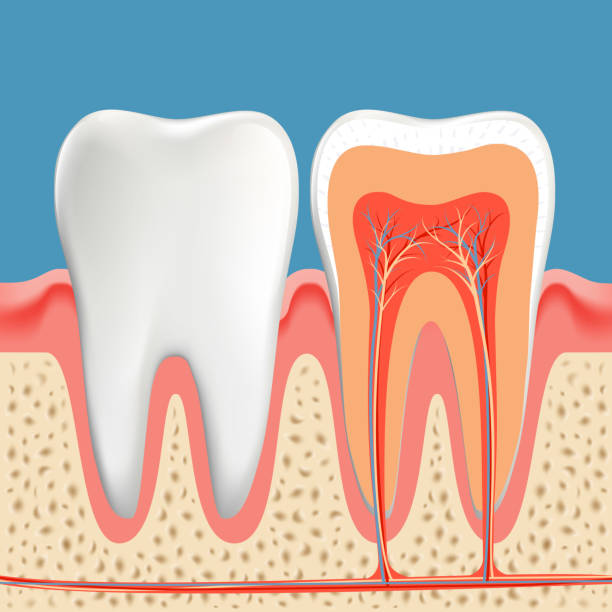
Article
Modern Irrigation Activation: Ultrasonic vs Sonic vs Laser
After shaping the canal, irrigation determines whether bacteria will stay or be washed away.
Standard syringe irrigation cannot really reach isthmuses, lateral canals, or deep dentinal tubules. The question, therefore, is not whether activation helps; it is which method actually works.
The market offers ultrasonic, sonic, and laser systems and every method claims the best results. Let’s clear the doubts and find out what the evidence says.
Why Activation Matters?
Root canal treatment aims to reduce microbial load to make it compatible with periapical healing.
Bacteria organize into biofilms and embed in matrices that shield them from antimicrobials1.
Standard needle irrigation can't penetrate complex anatomy. Activation methods claim to improve irrigant penetration and biofilm disruption. But do they deliver clinical results?
Method 1: Passive Ultrasonic Irrigation (PUI)
PUI involves placing an ultrasonically activated file or smooth wire in the irrigant-filled canal without touching the walls. It creates gentle fluid currents that enhance debris and biofilm removal2.
The Evidence:
A systematic review found that passive ultrasonic irrigation significantly improved debris removal when compared to syringe irrigation.
PUI is most widely studied and used due to its consistent evidence of improved cleaning efficacy and antimicrobial effectiveness.
Suggested Protocol1:
- Frequency around 25-30 kHz
- Activation time of 3 cycles and 20 seconds each
- File size of #15 or #20 smooth wire
- Positioning it 1-2mm short of the working length
- Canal needs to be filled with irrigant during activation
Cost: Moderate
Method 2: Sonic Activation
Sonic activation uses lower frequencies compared to ultrasonic and produces larger amplitude oscillations via mechanical agitation.
The Evidence:
Studies that compared sonic versus ultrasonic activation found that ultrasonic one demonstrated superior antimicrobial efficacy, though results vary in different studies4.
Sonic activation improved debris removal compared with syringe irrigation, but its effect was less than ultrasonic activation.
Clinical Considerations:
- It is less expensive than ultrasonic
- Easier technique as it easily fits a standard slow-speed handpiece
- Ideal for moderate case complexity
- May not showcase ultrasonic efficacy in complex anatomy
Examples: EndoActivator, EDDY system
Cost: Low to moderate
Method 3: Laser-Activated Irrigation (LAI)
Laser-activated irrigation, particularly using Er:YAG and Er,Cr:YSGG lasers with photon-induced photoacoustic streaming (PIPS), creates rapid fluid movement and cavitation bubbles5.
The Evidence:
A 2025 systematic review compared laser irrigation and passive ultrasonic irrigation and found that there is not much difference in bacterial load. But yes, both were superior to syringe irrigation alone.
Laser-activated irrigation shows effective biofilm disruption and debris removal in laboratory studies. But clinical evidence remains limited when compared to the established ultrasonic method6.
The Reality Check:
Laser systems definitely show promising results in laboratory settings. But the pros like the high cost, technique sensitivity, and lack of long-term clinical outcome data make it a less favourable option for routine endodontic practice6.
Cost: Very high
What About Just Syringe Irrigation?
Conventional syringe irrigation, when performed with proper technique, which includes side-vented needles, adequate volume, and multiple exchanges, and remains effective for everyday cases1.
Studies consistently show that activation methods improve debris and smear layer removal compared to syringe irrigation alone.
When Syringe Is Adequate:
- Straight, wide canals
- Adequate working length achieved
- Young patients with open apices
When Activation Is Beneficial:
- Complex anatomy
- Retreatment cases
- Persistent infections
- Calcified or narrow canals
The Evidence-Based Recommendation
Based on systematic reviews7:
Best Evidence: Passive ultrasonic irrigation (PUI)
- Most studied activation method
- Consistent improvement over syringe irrigation
- Cost-effective for general practice
- Standardized protocols available
Good Alternative: Sonic activation
- Lower cost entry point
- Easier learning curve
- Effective for moderate complexity cases
Experimental Stage: Laser-activated irrigation
- Impressive laboratory results
- Clinical superiority unproven
- Cost prohibitive for most practices
- Reserve for research-active practices
Final Takeaway
Irrigation activation improves cleaning and antimicrobial efficacy and is clearly proven.
Ultrasonic activation remains the gold standard and is well-studied as well as cost-effective. Sonic systems offer a reasonable alternative at a lower cost. Lasers show laboratory promise but lack clinical validation to justify their expense.
References
- Gomes BPFA, Aveiro E, Kishen A. Irrigants and irrigation activation systems in Endodontics. Braz Dent J. 2023 Oct 27;34(4):1–33.
- Căpută PE, Retsas A, Kuijk L, Chávez de Paz LE, Boutsioukis C. Ultrasonic irrigant activation during root canal treatment: A systematic review. J Endod. 2019;45(1):31-44.e13.
- Tonini R, Salvadori M, Audino E, Sauro S, Garo ML, Salgarello S. Irrigating solutions and activation methods used in clinical Endodontics: a systematic review. Front Oral Health. 2022 Jan 31;3:838043.
- Chu X, Feng S, Zhou W, Xu S, Zeng X. Cleaning efficacy of EDDY versus ultrasonically-activated irrigation in root canals: a systematic review and meta-analysis. BMC Oral Health. 2023;23:155.
- Badami V, Akarapu S, Kethineni H, Mittapalli SP, Bala KR, Fatima SF. Efficacy of laser-activated irrigation versus ultrasonic-activated irrigation: a systematic review. Cureus. 2023 Mar 19;15(3):e36352.
- Gulhane A, Sapkale KD, Sayed A, Ramugade M, Kamble S, Magar A. Comparative evaluation of the effectiveness of laser-assisted irrigation and ultrasonic irrigation on postoperative pain in single-visit endodontics: a systematic review. Cureus. 2025 May 28;17(5):e84947.
- Orozco-Gallego MJ, Pineda-Vélez EL, Rojas-Gutiérrez WJ, Rincón-Rodríguez ML, Agudelo-Suárez AA. Effectiveness of irrigation protocols in endodontic therapy: an umbrella review. Dent J (Basel). 2025 Jun 18;13(6):273. doi: 10.3390/dj13060273. PMID: 40559176; PMCID: PMC12192043.
Related Contents
Video
Management of Traumatic Tooth Avulsion: When & How?
Traumatic tooth avulsion is a true dental emergency requiring immediate and structured management to...
Article
Prosthetic Design Factors That Prevent Peri-Implant Bone Loss
You placed the implant perfectly. Osseointegration was flawless. But three years later, there is 3mm...
Article
Treatment Algorithms for Peri-Implant Mucositis and Peri-Implantitis
You can prevent most peri-implant disease. But once it develops, treatment becomes less predictable....
Article
Implant Surface Decontamination: What Actually Works
Treating peri-implantitis starts with one critical step, which is decontaminating the implant surfac...
Article
Growth & Facial Asymmetry: When to Worry
Only a few dentists can notice it and realize the asymmetry can signal an underlying skeletal imbala...
Article
Orthodontic Red Flags Every Dentist Should Recognize: Functional Habits and Airway Cues
Some malocclusions cases stall for reasons you can’t see on a scan, as not...
Article
Tooth Eruption & Space Management: What Orthodontists Should Watch For
Tooth eruption may not alwaxfys fit the predictable biological timeline. A delayed or ecto...
Article
Communication & Referral Timing: Getting It Right
You have identified a problem, maybe a severe Class III malocclusion in a 9-year-old, or it is an im...