Article
Mastering Minimally Invasive Root Canal Cleaning: Precision in Access & Canal Navigation
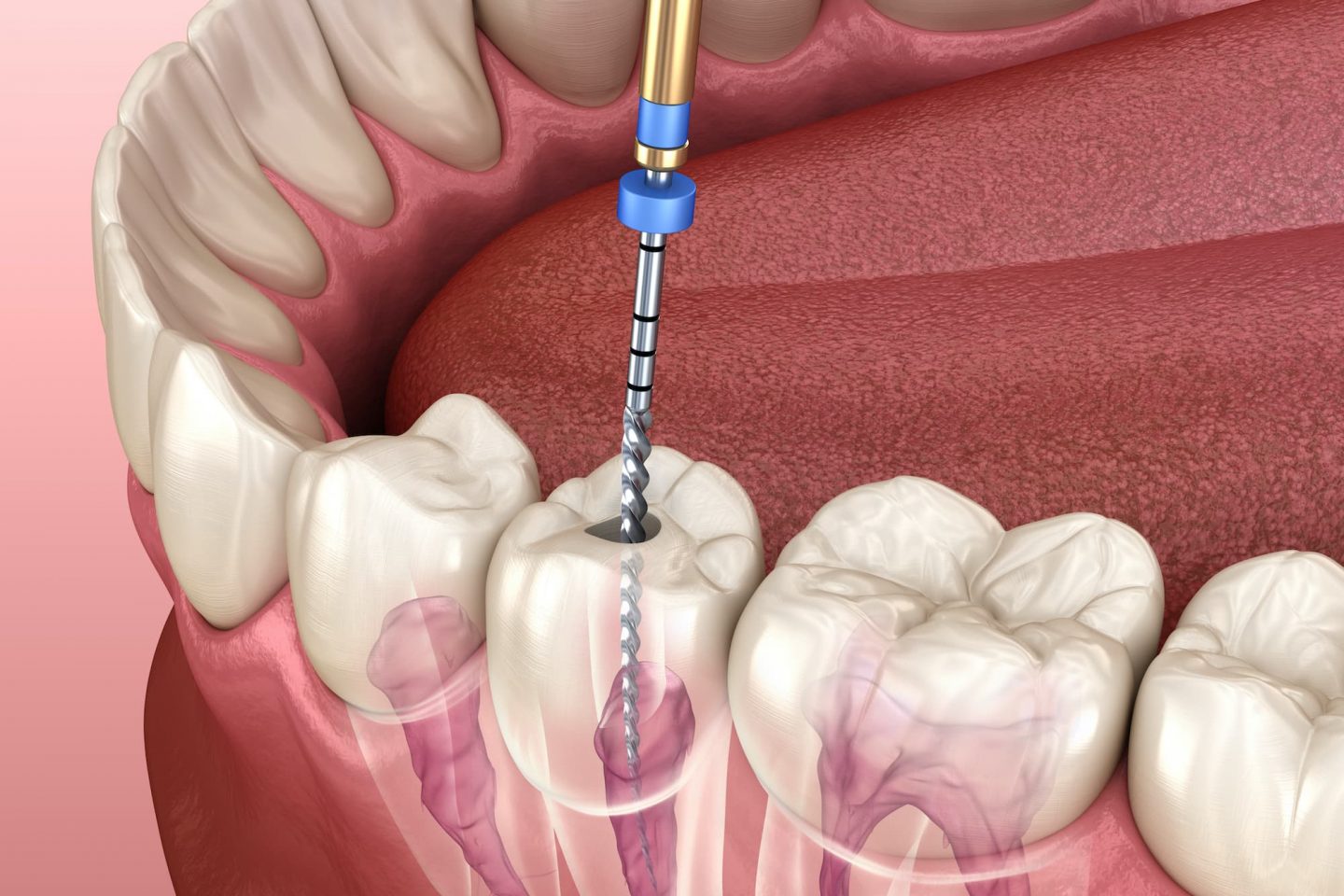
Imagine this: You’re about to start a root canal on a molar that looks deceptively simple on the radiograph, but you know that every drill stroke matters. Instead of aggressively punching through tooth structure, what if you could access the pulp chamber with surgical precision, preserving the very dentin that keeps the tooth strong? Welcome to the world of minimally invasive endodontics — where less is more, and precision is power.
Why “Less” Can Be Stronger
In traditional access preparations, a significant amount of pericervical dentin (PCD) gets sacrificed. But research shows that preserving PCD isn’t just a theoretical advantage, it has genuine biomechanical benefits. A systematic review and meta-analysis found that teeth with conservative or truss‑style access cavities had significantly higher fracture resistance than those with traditional access1.
Meanwhile, another lab‑based systematic review confirmed that when you protect PCD, you help the tooth resist fracture even after instrumentation2.
That’s huge for daily practice: by being conservative, you’re not just “saving tooth,” you’re boosting long‑term survival.
The Real Challenge: Finding the Canal Without Breaking Everything
Preserving tooth structure is only half the battle; the real test is locating and negotiating calcified canals. For many early-career dentists, this feels like a treasure hunt without a map, where the risks of ledging, perforation, or complete failure loom large.
Why Guided Endodontics Matters
- Evidence Speaks: In vitro studies show conventional techniques locate only 41.7% of calcified canals, while guided endodontics achieves a remarkable 91.7% success rate with minimal substance loss (~9.8 mm³ vs. ~49.9 mm³)3.
- Consistency Across Studies: A review of 45 studies found 43 confirmed guided endodontics as effective and precise for calcified canals4.
- Less Tooth Sacrifice: Guided access preserves dentin, reducing the risk of weakening the tooth long-term.
Technology Behind the Success
- CBCT Imaging: Provides a 3D roadmap of hidden canals5.
- 3D-Printed Guides: Transform complex anatomy into predictable access.
- Dynamic Navigation Systems: Emerging tools that allow real-time canal tracking.
Clinical Confidence & Patient Benefit
- For Clinicians: Reduces stress and improves predictability, especially for those early in their careers.
- For Patients: Less tooth structure lost means stronger teeth and better long-term outcomes.
Future Outlook
Guided endodontics is not just a workaround for calcified canals; it’s the new standard of precision. With AI-assisted canal detection and dynamic navigation on the horizon, the “treasure hunt” is becoming a guided journey with a clear path to success6.
The Tightrope: Risk vs Reward
Minimally invasive access cavities preserve structure but can raise risks like ledging or file binding. Safe practice means combining magnification, ultrasonic refinement, and CBCT mapping to balance conservation with control7.
Practical Guardrails
- Magnification (microscope/loupes) improves canal detection and reduces iatrogenic errors.
- Ultrasonic tips & safe-end burs allow precise troughing without excessive enlargement.
- Pre-op CBCT provides a 3D roadmap of canal anatomy, guiding conservative yet predictable access.
The Take-Home Message
- Minimally invasive root canal cleaning isn’t about avoiding the bur, it’s about using it strategically.
- Success comes from preserving essential structures while confidently navigating complex anatomies.
- Guided access enhances precision, helping clinicians minimize dentin loss and safely manage calcified or challenging canals.
- For early-career dentists, the formula is clear:
- Plan meticulously
- Think conservatively
- Execute with confidence
- This approach leads to:
- Stronger, longer-lasting teeth for patients
- More predictable clinical outcomes
- A steady rise in your endodontic mastery — one precise drill stroke at a time
References
- Mrinalini M, Gupta A, Soi S, Abraham D, Bukhari SH, Bukhari S. Endodontic Access Cavity Design and Fracture Resistance: A Systematic Review and Meta-Analysis of Conventional vs. Newer Access Cavity. Cureus. 2024 Sep 6;16(9).
- Haridoss S, Rajendran M, Swaminathan K, Sharma A, Elumalai V. Impact of pericervical dentin on fracture resistance of endodontically treated posterior permanent teeth: A systematic review and meta-analysis. The Journal of Contemporary Dental Practice. 2024 Jun 14;25(4):372-85.
- Connert T, Krug R, Eggmann F, Emsermann I, ElAyouti A, Weiger R, Kühl S, Krastl G. Guided endodontics versus conventional access cavity preparation: a comparative study on substance loss using 3-dimensional–printed teeth. Journal of endodontics. 2019 Mar 1;45(3):327-31.
- Peña-Bengoa F, Valenzuela M, Flores MJ, Dufey N, Pinto KP, Silva EJ. Effectiveness of guided endodontics in locating calcified root canals: a systematic review. Clinical Oral Investigations. 2023 May;27(5):2359-74.
- Singla M, Kaur H, Mittal L, Kaur S. The Art of Seeing the Invisible: CBCT & Missed Canals. Int J Cur Res Rev. 2022 May;14(10): DOI:10.31782/IJCRR.2022.141006.
- Leelamma LK, Suprit SP, Swargam VT, M.R .MF, Amrutha AS, Vinay VR. AI in Endodontics: Automated Root Canal Detection and Measurement. Journal of Contemporary Clinical Practice. 2025 Sep;11(9):838-842.
- Silva EJ, De‐Deus G, Souza EM, Belladonna FG, Cavalcante DM, Simões‐Carvalho M, Versiani MA. Present status and future directions–Minimal endodontic access cavities. International Endodontic Journal. 2022 May;55:531-87.
Related Contents
Article
Prosthetic Design Factors That Prevent Peri-Implant Bone Loss
You placed the implant perfectly. Osseointegration was flawless. But three years later, there is 3mm...
Article
Treatment Algorithms for Peri-Implant Mucositis and Peri-Implantitis
You can prevent most peri-implant disease. But once it develops, treatment becomes less predictable....
Article
Implant Surface Decontamination: What Actually Works
Treating peri-implantitis starts with one critical step, which is decontaminating the implant surfac...
Article
Growth & Facial Asymmetry: When to Worry
Only a few dentists can notice it and realize the asymmetry can signal an underlying skeletal imbala...

Article
Orthodontic Red Flags Every Dentist Should Recognize: Functional Habits and Airway Cues
Some malocclusions cases stall for reasons you can’t see on a scan, as not...
Article
Tooth Eruption & Space Management: What Orthodontists Should Watch For
Tooth eruption may not alwaxfys fit the predictable biological timeline. A delayed or ecto...
Article
Communication & Referral Timing: Getting It Right
You have identified a problem, maybe a severe Class III malocclusion in a 9-year-old, or it is an im...
Article
Rotary File Fatigue – How to Prevent Separation?
File breakage in maxillary molars is not a rare sight, but definitely no less than a nightmare. But...