
Article
Splinting Techniques: Types, Duration, and Evidence-Based Recommendations
Why do some luxated or avulsed teeth heal predictably while others fail?
The answer mostly depends on splint selection, design, and duration.
For dentists, splinting is not just an immobilization tool, but a precision tool that influences both immediate outcomes and long-term tooth survival1,2. Recent studies have shown that modern splints and techniques can well optimize the stress distribution3.
Types of Dental Splints in Trauma Management
Flexible Trauma Splints3
- Immediately stabilizes luxated or avulsed teeth.
- Allow controlled mobility (10–100 µm)
- Facilitates periodontal ligament healing while minimizing ankylosis and external root resorption [3,4].
Common materials: nylon monofilament line, titanium trauma splints, and fiber-reinforced composite (FRC) splints.
As per Finite Element Analysis (2025), in comparison to composite wire splints, nylon monofilament–based splints distribute stress more physiologically.
Chairside Tips:
- Avoid excessive rigidity; slight movement supports physiologic healing.
- Meticulously check occlusion after bonding as premature contacts can derail recovery.
Common Mistake To Avoid:
Avoid applying bonding agents near the gingival margin. It can result in trapping plaque and slows tissue repair. So, keep margins clean and minimal.
Occlusal Splints
- Indicated for temporomandibular disorders (TMDs) or post-bruxism management.
- Redistribute occlusal forces, reduce muscle hyperactivity, and protect teeth from overload.
- Anterior repositioning splints can reduce TMJ pain and improve joint function following disc displacement [5].
Clinical designs: repositioning splints, anterior bite planes and stabilization splints fabricated from either heat-cured acrylic resin or vacuum-formed thermoplastics.
Chairside Tips:
- After muscle adaptation, always reassess the fit; the bite will evolve.
- Discuss the purpose and expected outcomes; patient compliance determines success.
Common Mistake To Avoid:
Ignoring occlusal discrepancies or early discomfort. Small errors can trigger larger TMJ complications.
Periodontal Splints
- Used for mobile teeth due to periodontal attachment loss, bone regeneration procedures, or surgical trauma6.
- They can be applied labially or lingually, depending on aesthetic and functional requirements.
- These splints are capable of maintaining physiologic movement and distributing masticatory loads evenly. Thus, supporting long-term tooth retention8
Common materials: fiber-reinforced composites, stainless steel wires (up to 0.4 mm), or polyethylene ribbon–reinforced resins7.
Chairside Tips:
- Select abutment teeth that have sufficient bone and periodontal support.
- Reinforce hygiene. Interdental brushes and floss threaders prevent plaque buildup around splint margins.
Common Mistake To Avoid:
Including compromised or mobile abutment teeth. In turn, it reduces the longevity of the splint and overall prognosis.
Orthodontic or Short-Term Stabilization Splints1,2
- Used after extractions, minor trauma or orthodontic repositioning.
- Short-term stabilization options: thin resin-bonded wire splints or flexible composite splints.
- Offer temporary stabilization without interfering with oral hygiene or occlusion.
- Choice of material and duration will depend on trauma severity, root development, and patient compliance.
Common Materials: Flexible wire-composite (0.3–0.4 mm stainless steel wire), polyethylene fiber ribbons, nylon monofilament fishing line (0.13–0.25 mm), hermoplastic retainers.
Chairside Tips:
- For stability, splints must be extended 1–2 teeth beyond the mobile or traumatized one.
- Ensure interproximal cleaning is not blocked by composite.
- Articulation must be checked in centric and excursive movements to ensure that splint is not interfering with the function.
- Keep a light hand. Excessive bonding can make a “temporary” splint feel permanent.
Common Mistake:
- Over-contouring the composite around the wire or fiber makes the splint too rigid. It will trap plaque and defeat the purpose of controlled mobility.
- Reassess at 2–4 weeks as prolonged use increases the risk of ankylosis and delayed remodeling.
Duration and Follow-Up
Splinting duration should follow IADT 2020 guidelines, with adjustments based on trauma severity and healing progress9:
- Uncomplicated luxation or avulsion: 2 weeks (flexible splint)
- Severe trauma / root fracture: 4–8 weeks
- Replanted avulsed teeth: 2–4 weeks (depending on extraoral dry time)
- Periodontal splinting: 4–8 weeks, with reassessment
- Occlusal splints: Long-term, usually worn nightly
Follow-up Protocols9:
- Clinical and radiographic evaluation at 1, 2, 4 weeks, and 3–6 months to detect root resorption, ankylosis, or splint failure.
- Pulp vitality testing for replanted or luxated teeth.
- Oral hygiene reinforcement to prevent plaque accumulation around splints.
Clinical Decision-Making Tree for Splint Selection
|
Scenario |
Recommended Splint Type |
Notes |
|
Pediatric trauma (luxation/avulsion) |
Nylon fishing line or fiber splint |
Immediate stabilization; controlled mobility |
|
Adult trauma |
Titanium trauma splint or FRC |
Adjust based on mobility and comfort |
|
Periodontal mobility |
FRC or flexible wire-composite |
Long-term support without excessive rigidity |
|
TMD/bruxism |
Occlusal splint (adjustable/full coverage) |
Post-trauma protection and muscle relaxation |
Selection will depend upon mobility cause, periodontal support, and patient comfort. It will help to ensure that splint is applied only when required1
Final Takeaway
Effective splinting does not just balance stability with physiologic mobility but also supports optimal healing and long-term function. Aligning clinical decisions with evidence-based recommendations and following IADT-guided durations, the treatment outcomes could be enhanced; while complications are minimized.
References
- Kathariya R, Devanoorkar A. To splint or not to splint: The current status of periodontal splinting. J Int Acad Periodontol. 2016;18(2):47-55.
- Bourguignon C, et al. 2020 IADT Guidelines for the Evaluation and Management of Traumatic Dental Injuries: Fractures and Luxations. Dent Traumatol. 2020;36(5):373-386.
- Burns B, Welbury R. IADT Guidelines 2020: An Update. Dent Traumatol. 2020;36(5):387-392.
- Sobczak-Zagalska M, Emerich K. Evaluation of nylon fishing line splints in pediatric dental trauma: A finite element study. MDPI Dent J. 2025;13(4):211.
- Ma Z, Xie Q, Yang C, Zhang S, Shen Y, Abdelrehem A. Can anterior repositioning splint effectively treat temporomandibular joint disc displacement?. Scientific reports. 2019 Jan 24;9(1):534.
- Golob Deeb J, Carrico CK, Miller A, Bennett J, Ghassemi A. Maintenance of Periodontally Compromised Teeth Using Periodontal Splints. International Journal of Dentistry. 2025;2025(1):7119673.
- Ünlü N, Altınbilek N, Velioğlu MS. Retrospective evaluation of fiber-reinforced periodontal splints and resin bridges in the anterior region. International Dental Research. 2021 Aug 31;11(Suppl. 1):122-7.
- Liu Y, Fang M, Zhao R, Liu H, Tian M, Zhong S, Bai S. Effects of periodontal splints on biomechanical behaviors in compromised periodontal tissues and cement layer: 3D finite element analysis. Polymers. 2022 Jul 12;14(14):2835.
- Bourguignon C, Cohenca N, Lauridsen E, Flores MT, O'Connell AC, Day PF, Tsilingaridis G, Abbott PV, Fouad AF, Hicks L, Andreasen JO. International Association of Dental Traumatology guidelines for the management of traumatic dental injuries: 1. Fractures and luxations. Dental Traumatology. 2020 Aug;36(4):314-30.
Related Contents
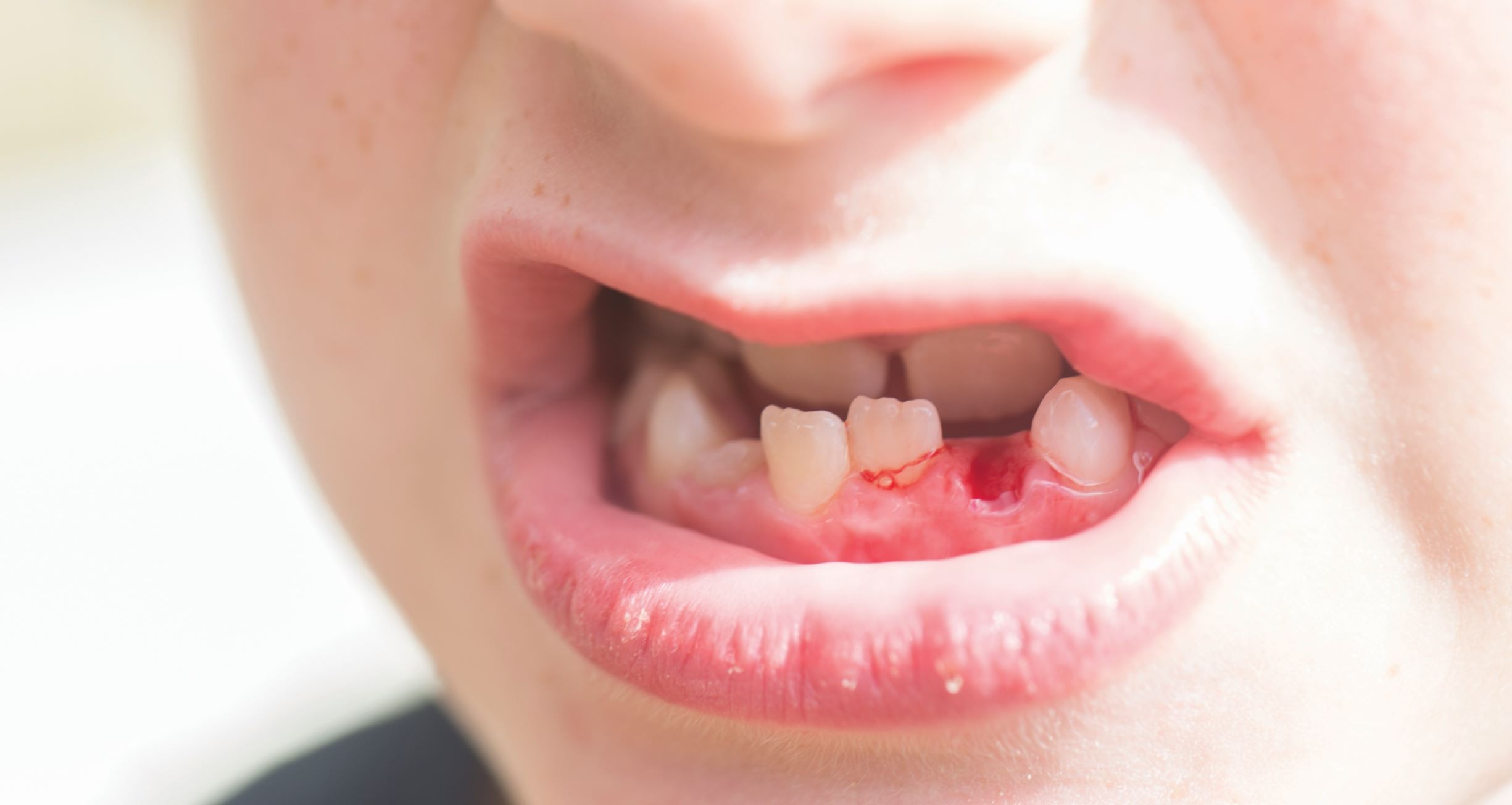
Video
Management of Traumatic Tooth Avulsion: When & How?
Traumatic tooth avulsion is a true dental emergency requiring immediate and structured management to...
Article
Prosthetic Design Factors That Prevent Peri-Implant Bone Loss
You placed the implant perfectly. Osseointegration was flawless. But three years later, there is 3mm...
Article
Treatment Algorithms for Peri-Implant Mucositis and Peri-Implantitis
You can prevent most peri-implant disease. But once it develops, treatment becomes less predictable....
Article
Implant Surface Decontamination: What Actually Works
Treating peri-implantitis starts with one critical step, which is decontaminating the implant surfac...
Article
Growth & Facial Asymmetry: When to Worry
Only a few dentists can notice it and realize the asymmetry can signal an underlying skeletal imbala...
Article
Orthodontic Red Flags Every Dentist Should Recognize: Functional Habits and Airway Cues
Some malocclusions cases stall for reasons you can’t see on a scan, as not...
Article
Tooth Eruption & Space Management: What Orthodontists Should Watch For
Tooth eruption may not alwaxfys fit the predictable biological timeline. A delayed or ecto...
Article
Communication & Referral Timing: Getting It Right
You have identified a problem, maybe a severe Class III malocclusion in a 9-year-old, or it is an im...